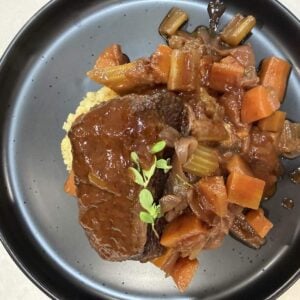
John’s Beef Short Ribs in Red Wine on Wattleseed and Pepperberry Mash

John’s beef short ribs slow braised for five hours in Fleurieu Shiraz until the meat falls from the bone, served on a buttery wattleseed and pepperberry mash with the braising vegetables and a glossy red wine jus. A romantic winter dish from the Fleurieu Peninsula.
Equipment
- Heavy based pot or Dutch oven with lid
- Separate saucepan for reducing the wine
- Potato ricer or masher
Ingredients
For the ribs
- 2 beef short ribs about 350g each, bone in, ideally Thomas Farms beef short ribs
- 1 tbsp olive oil
- Sea salt and freshly cracked black pepper
- 5 shallots diced
- 2 large carrots diced
- 1 large stick celery diced
- 2 tbsp tomato paste
- 750 ml red wine Fleurieu or McLaren Vale Shiraz
- 500 ml beef stock
- 3 sprigs thyme
For the wattleseed and pepperberry mash
- 600 g floury potatoes Sebago or Dutch Cream, peeled and chunked
- 80 g butter
- 1 tsp ground roasted wattleseed
- 1/2 tsp ground native pepperberry (mountain pepper) or to taste
- Sea salt
Instructions
The ribs
- Take the ribs out of the fridge 30 minutes ahead. Pat them very dry, then season firmly all over with salt and pepper. Dry meat is what gives you that deep crust, so do not skip this.
- Pour the wine into a separate saucepan, bring it to a steady boil, then leave it ticking away to reduce while you get on with the ribs and vegetables. You want it halved, glossy and slightly syrupy, which takes around 8 to 10 minutes. Keep half an eye on it and pull it off the heat once it is there. Reducing the wine before it goes in concentrates the flavour and burns off the sharp alcohol, so the sauce is rounded and deep from the start.
- Heat the olive oil in a heavy pot over medium-high. Sear the ribs on every side until darkly browned, 3 to 4 minutes a side. Take your time, that colour is pure flavour. Set the ribs aside.
- Drop to medium heat. In the same pot, soften the diced shallots, carrot and celery for 7 to 8 minutes until they catch a little colour.
- Stir in the tomato paste and cook it out for 2 minutes until it darkens, which takes away the raw tinned edge and builds a richer base.
- Pour the reduced wine into the vegetables, scraping the bottom of the pot to lift all the browned bits. Return the ribs, then add the 500ml of beef stock. Tuck in the thyme.
- Bring to a bare, gentle simmer. Cover with the lid on and hold it at the laziest simmer your gas hob will give you for 5 hours, turning the ribs once or twice. You are looking for the occasional lazy bubble, never a rolling boil. The meat is ready when it surrenders off the bone at the touch of a fork.
- Lift the ribs out and rest them. Skim only the excess fat from the surface, then simmer the sauce uncovered for 15 to 20 minutes to reduce and intensify it into a proper jus, glossy and deeply concentrated, thick enough to coat the back of a spoon. Taste and adjust the salt. Do not waste a drop of this, it is the whole soul of the dish.
The mash
- While the sauce reduces, boil the potatoes in well-salted water until completely tender, about 18 to 20 minutes. Drain and let them steam dry in the colander for a couple of minutes. Dry potatoes drink up butter far better than wet ones.
- Pass them through a ricer or mash thoroughly, then beat in the butter, wattleseed and pepperberry. Season with salt to taste. Go gently with the pepperberry at first, it builds, so taste as you add.
To serve
- Spoon a generous bed of the wattleseed and pepperberry mash onto each plate. Sit a short rib on top, pile the braised vegetables around, and spoon the glossy red wine jus over and around.
Notes
Five hours at a true low simmer gives the silky, falling texture. Use a simmer mat if your hob runs hot. Get the wine reducing in its own pan right at the start so nothing stands around. Toast and grind your own wattleseed for that coffee-hazelnut depth. Pepperberry heat is delayed, so add half, taste, then build. Any leftover jus is a gift, not waste: refrigerate it and use it the next day as the base for a beef noodle dish, a soup, a pie, or stirred through fresh pasta.
Tried this recipe?Let us know how it was!